
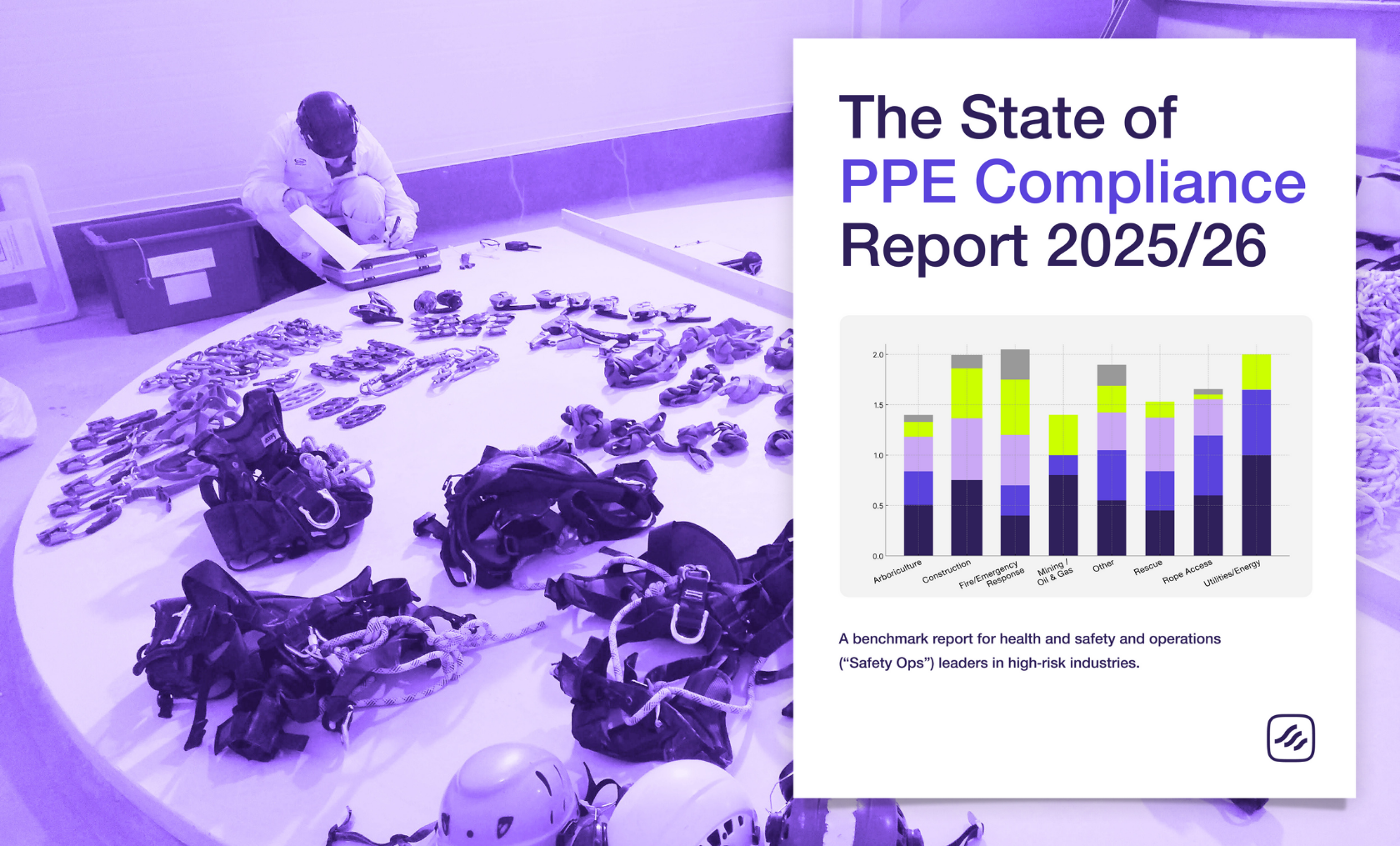
Data collection: Online survey (n = 200) conducted in 2025. Raw response exports underpin every figure and chart in this report.
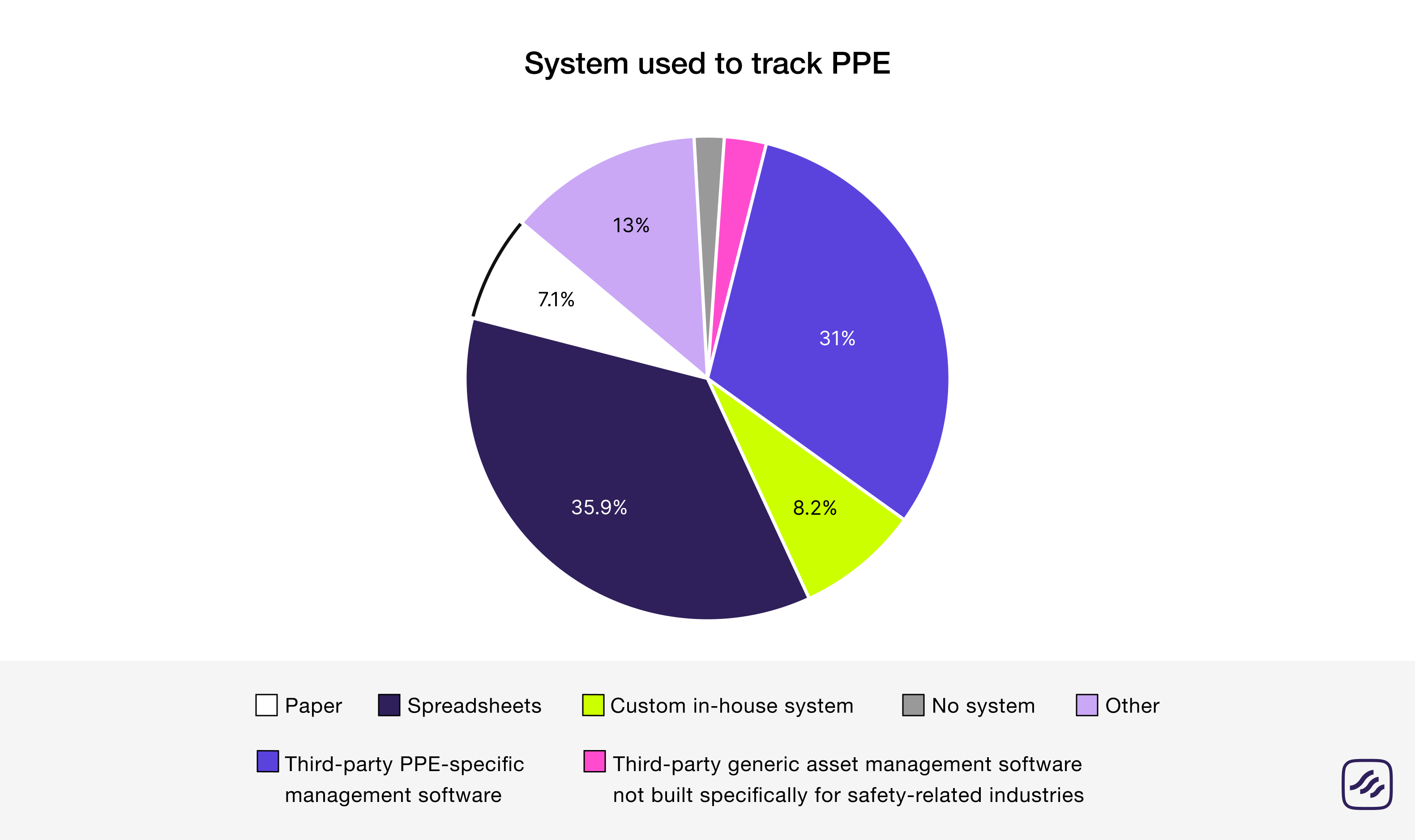
48% of teams are managing their PPE/equipment using tools that aren’t designed specifically for safety- and compliance-related industries.
31% use third‑party PPE‑specific software; 8.2% use custom in‑house systems.
To overcome the current challenges Safety Ops leaders are experiencing and ensure ongoing compliance and safety, they will need a diverse skillset spanning technology, regulatory and product knowledge, culture and communication skills and general operational skills.
Safety Ops professionals operate in a complex environment: regulators and clients expect verifiable, up‑to‑date records; labour constraints and distributed teams increase the risk of missed inspections; and frontline expectations for mobile, scannable workflows are rising. Throw in changes in compliance requirements to the list, and Safety Ops is a complex and often high-pressure profession.
This report seeks to elevate the standard of PPE compliance by providing those in Safety Ops roles with industry benchmark data and insights.
A survey was conducted with health and safety, operations and field leaders across rope access, arboriculture, fire and emergency response, construction, mining/oil and gas, and other high‑risk sectors across the United Kingdom, Europe, the United States, Australia, and New Zealand (with 15% also stating “Other” as their region).
Team sizes varied: 54% have fewer than 20 PPE users in their team; 35% have 20-199 PPE users; 5% have 200-499 PPE users; and 7% have over 500 PPE users.
Data collection: Online survey (n = 200) conducted in 2025. Raw response exports underpin every figure and chart in this report. Percentages rounded to the nearest percent.
Most organisations manage less than 1,000 items of PPE and safety equipment (57% of responses), with fewer managing between 1,001–5,000 items (32%) and over 5,000 items (11%).
.png)
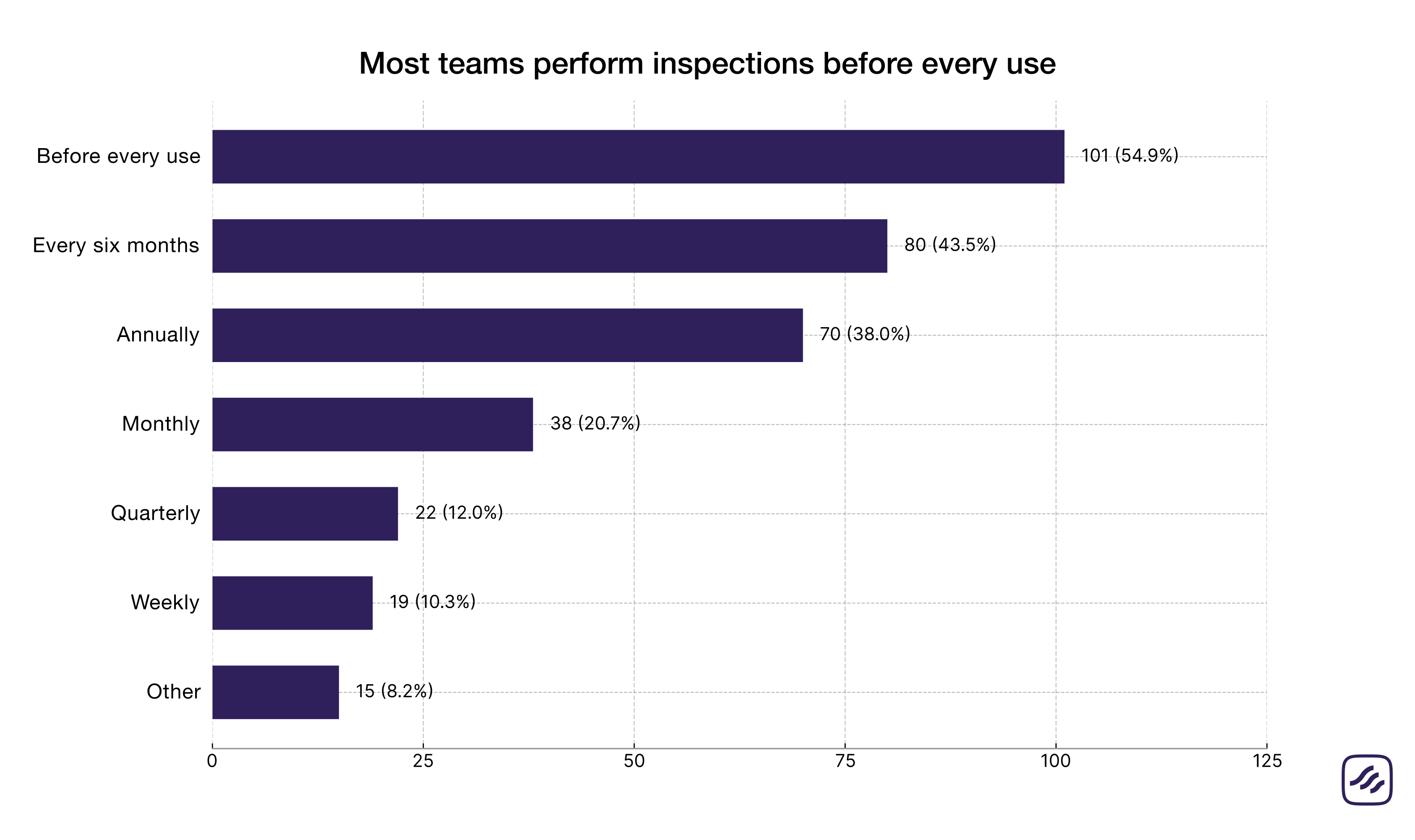
Most survey responders inspect equipment very frequently - 55% check before every use, with scheduled inspections at six-monthly or annual intervals, which aligns with regional and predominant regulatory requirements in respondent regions.
Most teams perform inspections before every use
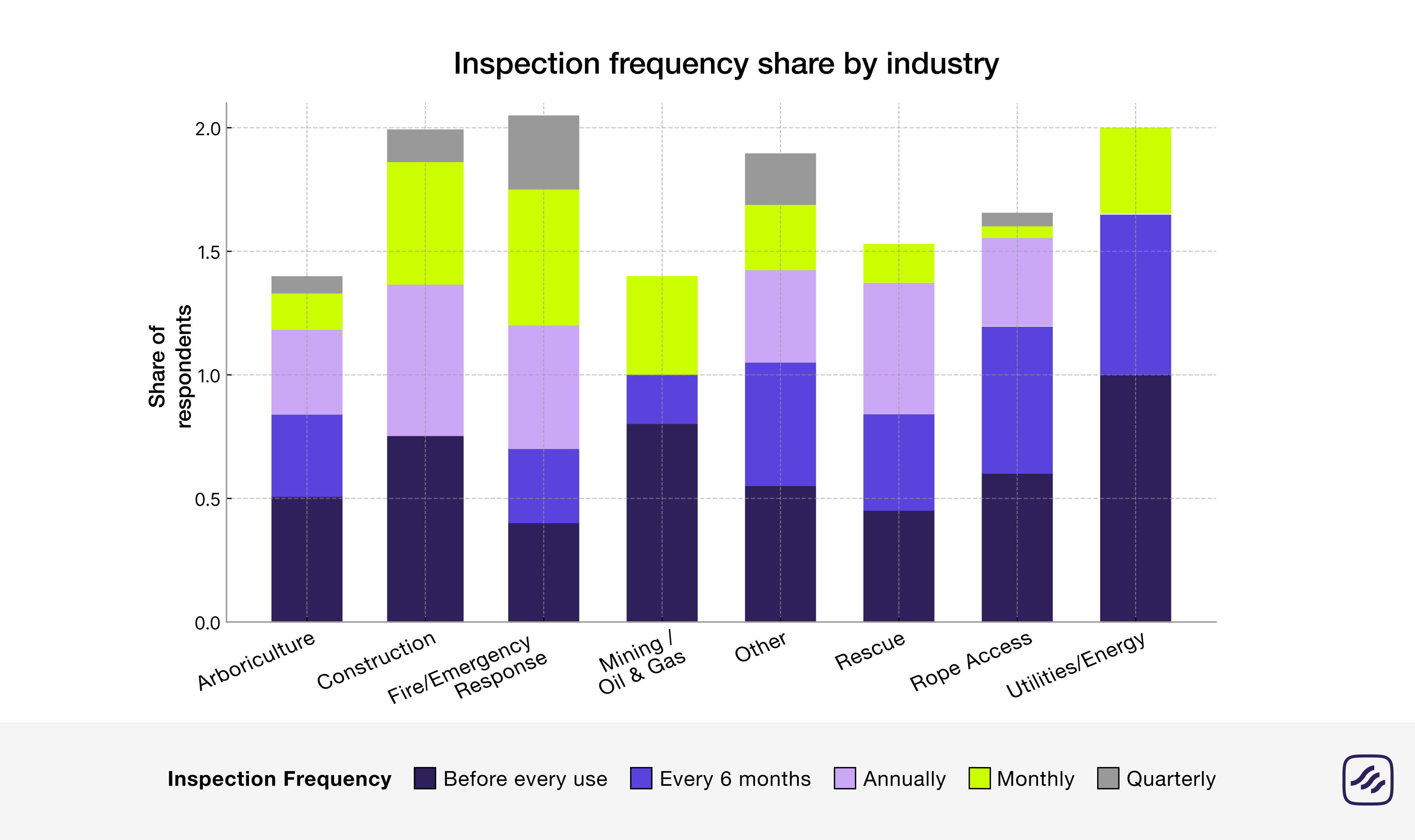
Industry patterns vary: overall fire/emergency response perform less frequent inspections compared with construction and utilities/energy.
Many safety teams are relying on inadequate systems to manage their equipment and compliance.
48% of teams are tracking and managing equipment, inspections and compliance using tools that aren’t designed specifically for safety and compliance related industries: paper, spreadsheets and no system at all came in at a combined 45% and generic asset management tools not built specifically for safety came in at 3%.
48% of teams aren’t using PPE-specific tools vs 31% that are
However, a large percentage of teams are already using PPE‑specific software (31%).
Respondents were asked how long it takes on average to record an inspection per item (identifying an item in their system, recording the inspection result, and updating data).
For most respondents, it takes on average one to two minutes to record an inspection for a single item (41%).
16% of respondents are incredibly efficient at less than a minute per item.
And 44% are spending more than three minutes recording the inspection for each item. For a team needing to inspect 1,000 items at a six-monthly inspection cadence, for example, that would take one person 50 hours (or 6.25 days working eight hours a day).

Teams using PPE-specific tools are finding measurable time savings.
Overall, 66% find it somewhat or very challenging to stay on top of expiry dates, with 30% finding it not challenging at all.
Among respondents managing equipment with paper, spreadsheets, or no tools, 21% report it very challenging compared with just 10.0% of PPE‑specific software users.
Again, those managing safety operations with dedicated, purpose-built systems are finding efficiency gains.
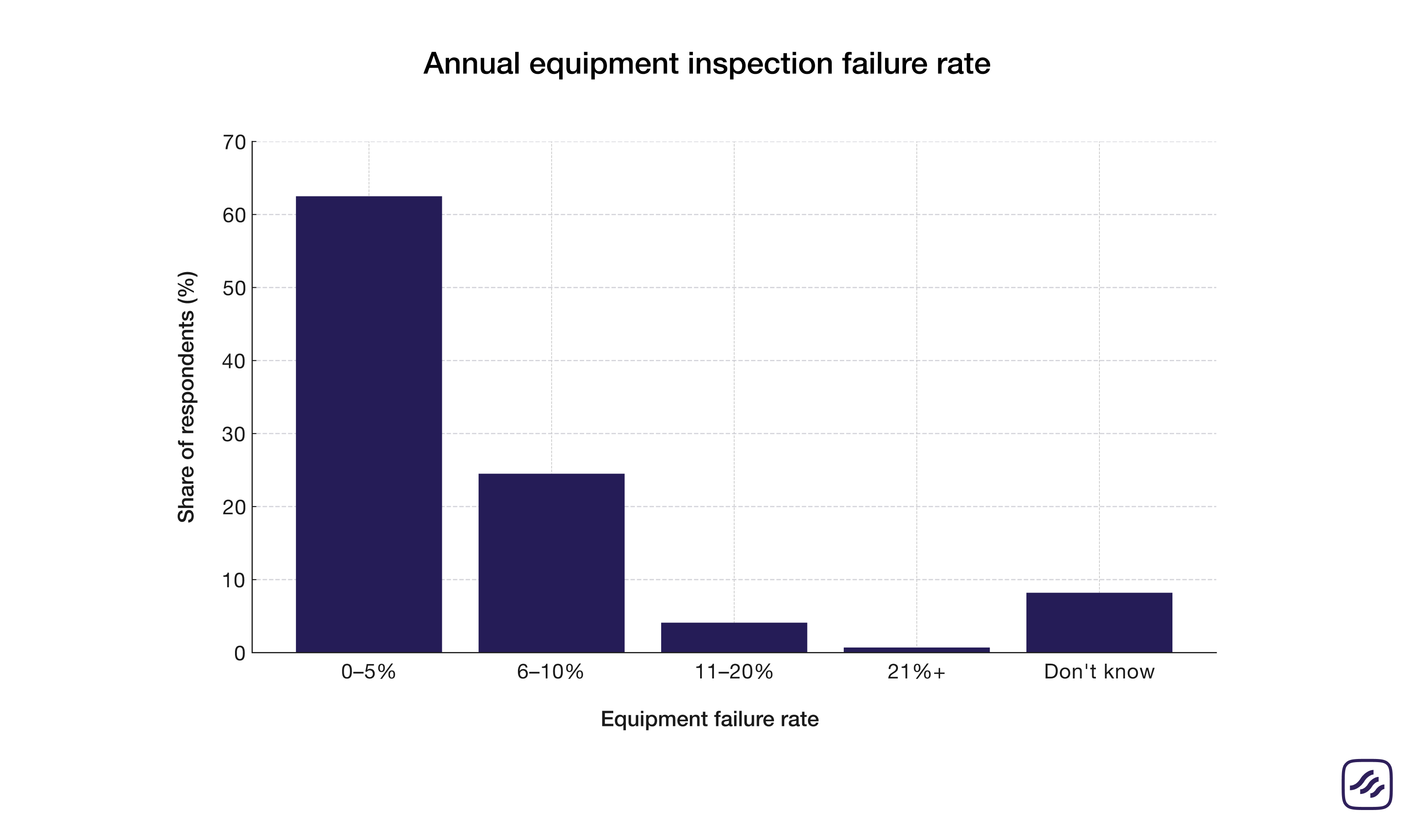
Gear failure doesn’t appear to be a sizeable issue.
63% of respondents report less than 5% of their PPE failing inspection; 25% report 6-10%; with very few reporting more than a 10% failure rate (5% report over 11% of gear fails inspection, and 8% don’t know).
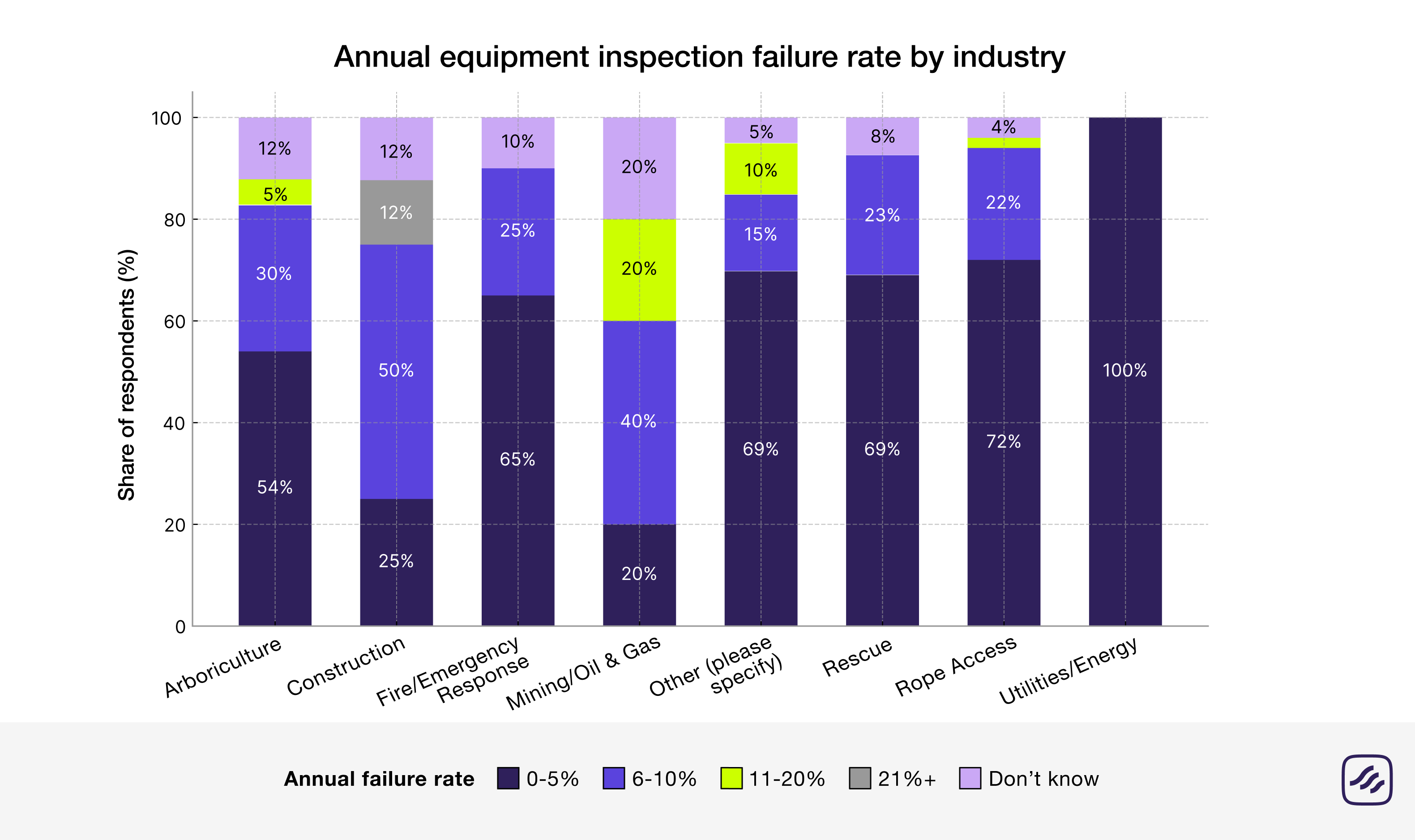
We can also see how this is split by industry. The table below shows how those in construction, where the working conditions are especially harsh on equipment, experience higher failure rates than those in utilities, who experience the lowest.
The top 3 reasons for PPE/safety equipment failing inspection were (with the first two being the most common by far):
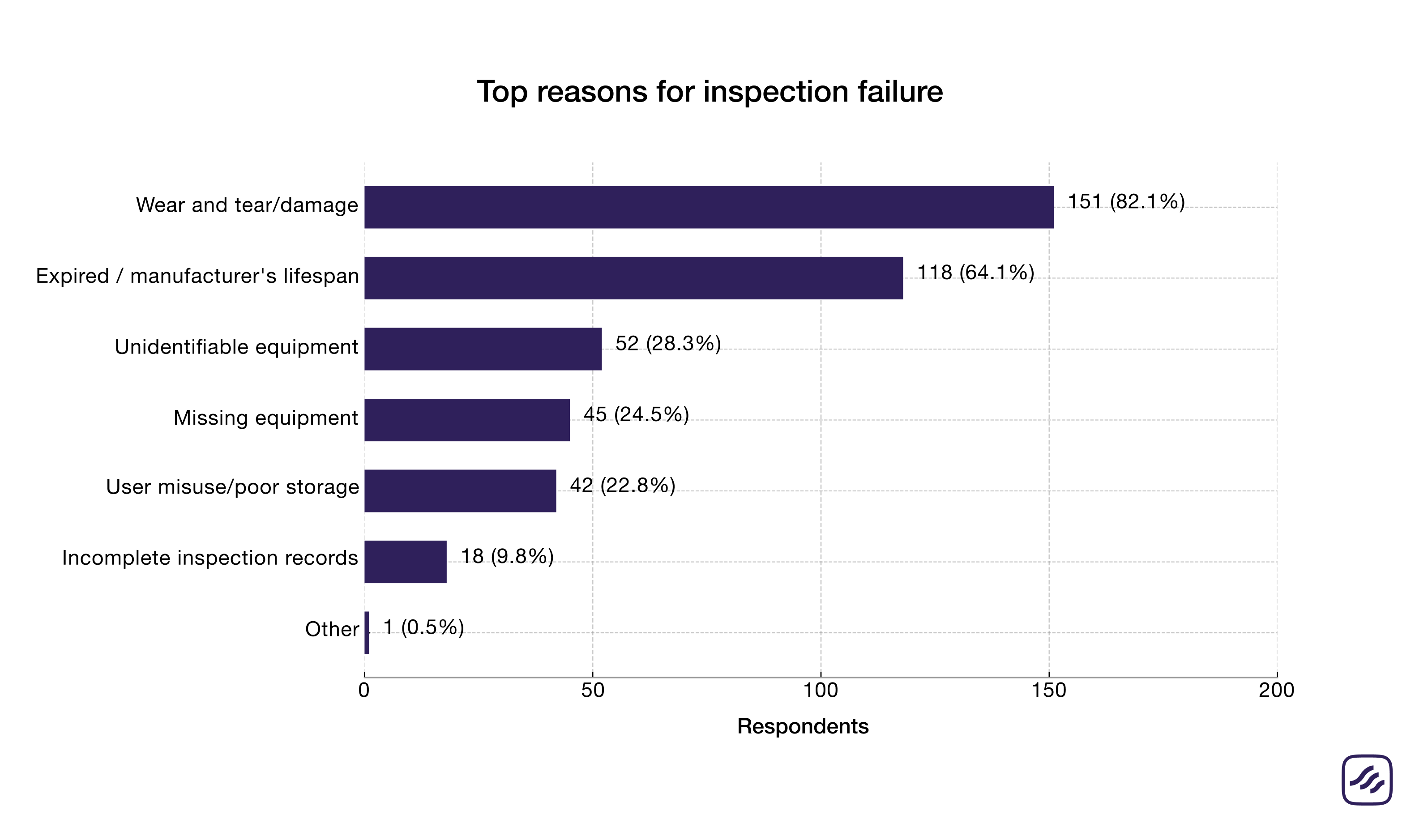
When analysing failure reasons across industries, arboriculture and construction teams report the highest wear-and-tear rates (86% and 88%), reflecting intensive daily use and exposure to harsh environmental conditions. Expired manufacturer lifespan results in 65-75% of inspection failures. In mining and oil and gas, the data suggests procedural weaknesses: 40% of respondents report incomplete inspection records and 60% cite missing equipment, the highest across all industries. Fire and emergency response teams show a more balanced failure profile, with moderate rates of physical damage (75%) but above-average user misuse (30%) - likely due to high-stress, rapid-response contexts.
.png)
86% of respondents were at least somewhat confident their compliance records would meet external audit requirements (with 43% very confident and 43% somewhat confident).
11% were not confident they’d meet audit requirements.
It’s worth noting that users of PPE‑specific tools to manage their equipment were 59% very confident vs 32% for those relying on paper/spreadsheet/none.
Typical audit preparation time is one to three days (34% of responses) and less than a day (27%). The time didn’t differ greatly between those using various tools for PPE compliance management.
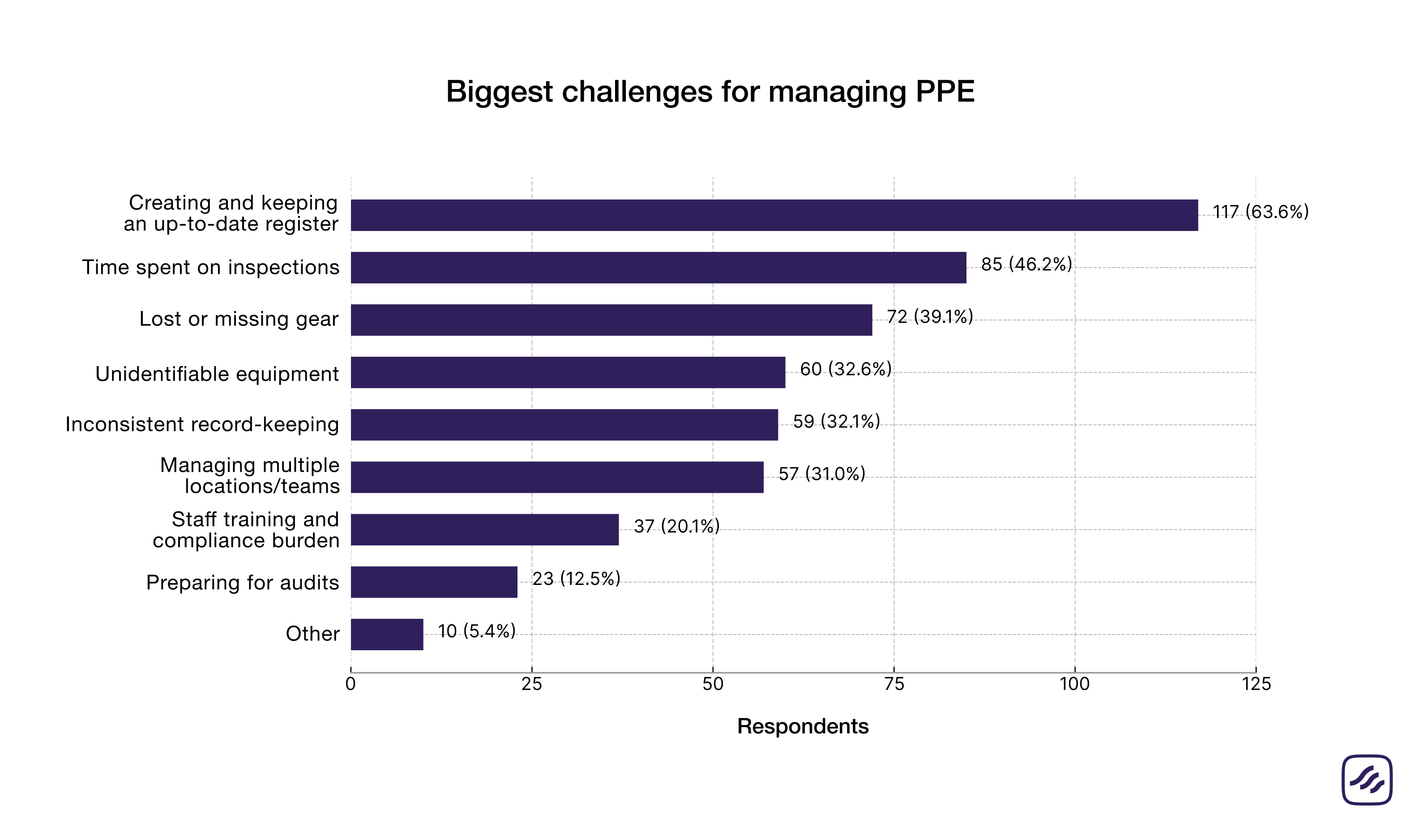
The top three pain points experienced when managing PPE and safety equipment were:
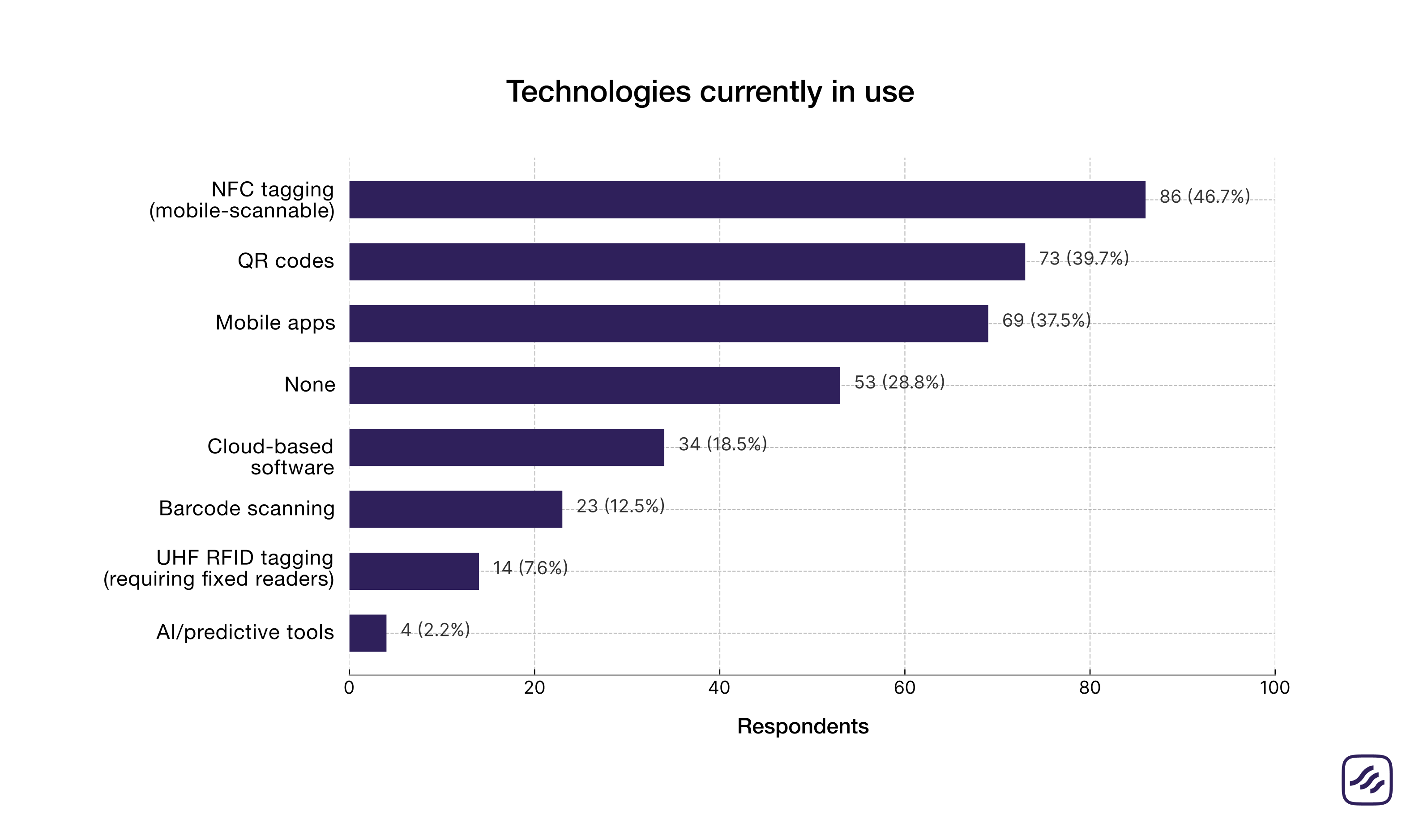
Mobile scanning is the predominant technology in use followed by mobile apps.
AI and predictive tools are not on the industry’s radar seemingly, with only four respondents stating they use such technology.
When asked “What do you see as the biggest compliance risks for safety teams in the next 2–3 years?”, responses included the following themes:
When asked “What skills will future Health and Safety or Operations Managers need most to stay ahead in PPE/safety equipment compliance?” responses were diverse and included:
“Creating and keeping an up‑to‑date register is the hardest part.”
“NFC/QR workflows help us identify items in the field and move faster.”
“Legislation and grey areas are a risk - we need clearer guidance and better follow‑through on reporting.”
“Over the next 2–3 years, safety teams face growing compliance risks from tightening and fragmented regulations, data privacy and AI-driven safety technologies, and complex global supply chains. The biggest challenge will be maintaining consistent, transparent, and tech-integrated safety compliance amid rapid operational and regulatory change.”
“Key skills will include expertise in risk assessment, thorough knowledge of safety regulations and PPE standards, and ability to conduct compliance monitoring and safety audits. Leadership skills are essential for fostering a strong safety culture, engaging teams, and driving continuous safety improvements.”
“Future Health and Safety or Operations Managers will need strong data and technology skills, regulatory agility, and the ability to lead cultural change to ensure PPE compliance. They must combine technical expertise with data-driven oversight to adapt quickly to evolving standards and innovations.”
“Future Health and Safety or Operations Managers will need a blend of technical, digital, and soft skills to effectively manage PPE and safety equipment compliance in the coming years.”
The State of PPE Compliance report set out to benchmark how safety operations teams across high-risk industries are managing their equipment, inspections and audit readiness. The findings highlight both progress and persistent gaps that define the current compliance landscape.
Across industries, PPE management practices remain split down the middle: roughly half of organisations now use dedicated PPE-specific software, while the other half still rely on paper, spreadsheets or ad hoc systems. This divide continues to shape performance. Teams using PPE-specific platforms report faster inspections (67.5% completing in under two minutes), greater audit confidence (58.8% very confident) and shorter audit preparation times compared with those using manual or generic systems. The efficiency and confidence gains are tangible, reinforcing the link between technology adoption and operational resilience.
Industry context continues to influence compliance profiles. Arboriculture and fire/emergency response lead in inspection frequency and wear-and-tear-related failures - reflecting daily frontline usage - while construction and mining, oil and gas teams struggle more with record-keeping consistency and missing equipment. These patterns suggest that compliance challenges are as much about process maturity and workflow integration as they are about inspection diligence.
The broader message for safety operations leaders is clear: PPE compliance in the coming years is not just an administrative task but an integrated component of risk management, workforce trust and operational efficiency. As regulations evolve and technology continues to embed itself into daily safety practice, the most effective leaders will be those who blend technical literacy (using data-driven, mobile-enabled tools) with strong people management, analytical thinking, and a deep understanding of safety standards and equipment lifecycles.
The data shows a maturing sector - one where compliance is shifting from reactive record-keeping to proactive, system-driven assurance. Organisations that invest in digital traceability and cross-team visibility today will not only meet regulatory expectations but also free their teams to focus on what matters most: preventing incidents, protecting people and sustaining safe, productive operations.
Scannable’s equipment management software and Smart PPE™ for safety teams is the easiest way to manage equipment and compliance.
Request a demo and see how Scannable can reduce PPE compliance admin by 80%.